

What Your Lens Tint Color Is Actually Doing Beyond Looking Good
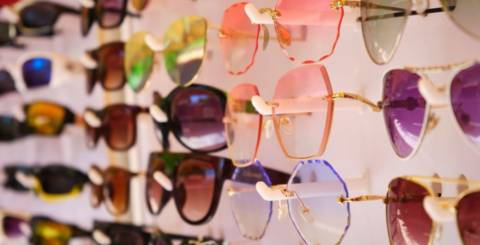
Open any sunglasses customizer and you'll usually hit the same wall: six or eight lens tint swatches lined up side by side, all described in roughly the same marketing language, "classic," "versatile," "bold." Nothing on the screen tells you that grey, brown, and green don't just look different. They change how bright the world appears, how true colors read, and how much glare cuts through before it reaches your eyes. Picking blind between swatches works fine when you're buying off a shelf. It works a lot less well when you're deliberately building custom sunglasses and could, in theory, pick correctly the first time.
Why Tint Color Isn't Just a Color Choice
Every lens tint does two jobs at once, whether the person choosing it realizes it or not: it reduces the total amount of visible light reaching your eyes, and it filters that light unevenly across the color spectrum. The first part is simple brightness control. The second part is what actually changes your experience: a tint that filters out more blue light will boost contrast and make edges easier to pick out, while a neutral tint that filters light evenly will keep colors looking closer to how they'd look with no lenses at all. There's one persistent myth worth clearing up before going further: a darker or more colorful tint does not mean more UV protection. UV filtering comes from a separate coating or treatment baked into the lens material, completely independent of tint color or darkness. The American Academy of Ophthalmology is direct about this point: the color and darkness of a lens tell you nothing about how much ultraviolet light it actually blocks, which is why checking for a genuine 100% UV or UV400 label matters more than judging a lens by how dark it looks. Tint is a visual-comfort decision. UV protection is a completely separate spec that should already be non-negotiable regardless of which tint you pick.
What Each Common Tint Actually Does
Once UV protection is treated as a given, tint becomes a question of contrast versus color accuracy, and the three most common options sit at different points along that spectrum.
Grey reduces overall brightness without meaningfully shifting how colors appear. It's the closest a tinted lens gets to "no lens at all" in terms of color perception, which makes it the most neutral, all-purpose option and the safest pick if you're not sure what you'll be using the sunglasses for. The tradeoff is that grey does the least to boost contrast compared to the other common tints.
Brown and amber sit at the opposite end. They filter more blue light, which sharpens contrast and makes edges and depth easier to read, useful for anything where distinguishing shapes against a busy background matters. The tradeoff is a visible warm color shift; grass, sky, and water all read slightly differently than they would through a neutral lens. All About Vision's lens color breakdown covers this contrast-versus-color-accuracy tradeoff in more depth if you want the fuller picture.
Green lands in between the two. It keeps colors reasonably close to natural while still filtering enough blue light to add a moderate contrast boost, a compromise tint for people who don't want to fully commit to either extreme.
Mirror coatings aren't a tint at all. They're a thin reflective layer applied on top of a base tint (usually grey, green, or brown), and their job is purely to reflect more light away from the lens before it ever reaches your eye. A mirrored lens still behaves according to whatever base tint sits underneath the coating; the mirror finish just adds an extra layer of glare reduction and a different look from the outside. There's also a fourth option worth knowing about if it shows up on a customizer: gradient tints, which run darker at the top of the lens and lighter toward the bottom. These exist for a specific reason rather than just style: they cut glare from overhead sun while leaving your lower field of vision brighter, which is part of why they show up often on driving-focused sunglasses. A gradient still uses one of the base tints described above; the gradient effect is layered on top of it, not a separate category of color.
Matching Tint to What You Actually Do
The tint-versus-activity question comes down to one underlying variable: visible light transmission, or how much light actually makes it through the lens to your eye. Darker, warmer tints let less through and work best in consistently bright conditions: daily driving, beach days, or anywhere the sun is the dominant lighting condition for most of the time you're wearing them. Lighter tints let more light through and hold up better in overcast, mixed, or fast-changing light, which is part of why REI's sunglasses buying guide frames tint choice around light transmission percentage rather than color preference alone. Practically, this tends to sort into a few patterns: grey for everyday wear and driving, where color accuracy matters and light stays fairly consistent; brown or amber for variable outdoor light, where the contrast boost helps track depth and detail; and green as the flexible middle option for people who move between the two conditions regularly rather than sticking to one environment. Someone commuting through a mostly sunny climate will get more consistent comfort out of grey than someone who spends afternoons under tree cover or shifting cloud, where a warmer tint keeps things from feeling flat. Neither is objectively better; they're solving for different lighting environments.
Why This Matters More When You're Building Custom Sunglasses
None of this is particularly relevant when you're grabbing whatever tint happens to be on the display pair at a store. It becomes directly relevant the moment you're deliberately choosing a tint from a menu of options with no in-person try-on to fall back on. That's exactly the situation a sunglasses customizer puts you in. Ray-Ban's custom sunglasses builder, for example, lets you choose frame color, lens type, and tint independently, along with an optional engraving, which means the tint decision isn't limited to whatever came pre-paired with a given frame. Knowing that grey preserves color accuracy, brown boosts contrast, and green splits the difference turns that step from a guess into an actual decision based on how you'll use the finished pair.
Conclusion
Lens tint gets treated like a paint color: pick whichever one looks best against the frame and move on. It's actually closer to picking a setting on a camera: each option changes what you see and how you see it, not just how the lenses look from the outside. Once that clicks, choosing a tint stops being a coin flip between swatches and starts being the one part of building your own pair that's worth slowing down for.
Similar Articles
Almost everyone who has worn polarized sunglasses has had this exact moment: you put your phone up to check a text, or glance at your car's dashboard display

Discover why Barbas hats are trending in modern fashion, offering timeless style, premium craftsmanship, and versatile looks for every wardrobe.

Discover timeless ladies watches for every occasion, from casual wear to formal events. Explore elegant styles, modern features, and lasting sophistication.

Discover why streetwear caps became icons of modern fashion culture, blending individuality, music, creativity, and everyday style.

Fashion has always evolved alongside culture, technology, and consumer behavior. Over the years, trends have shifted from formalwear to casualwear, from oversized branding to minimalist aesthetics, and from mass production to intentional design.
When we think about putting together a standout outfit, we often focus exclusively on the pieces that everyone else will see. We spend hours curating the perfect collection of tailored trousers, crisp shirts, and statement accessories.

Explore mood-based perfume for women with scents designed to boost productivity, encourage relaxation, and spark romance for every occasion.

Learn how to style modern shoulder bags for polished evening looks with chic tips that elevate outfits for dinners, parties, and events.

Let's be honest, gift shopping for someone with refined taste can feel like navigating a minefield. You want something meaningful, not just another item collecting dust on a shelf. Here's where watches step in.