

The Psychology Behind Why People Come Alive When They Step Into a Different Skin

There is a moment that happens consistently when someone puts on a costume that genuinely fits them, not in the physical sense but in the psychological one. Something changes. The posture shifts. The eyes take on a different quality. The voice might even change register. The person standing in front of the mirror looks, in some fundamental way, more like themselves than they did five minutes ago in their ordinary clothes.
This phenomenon is not imagined. It is not performed for the benefit of anyone watching. It happens too consistently, across too many different people and too many different contexts, to be explained away as simple enthusiasm for dress-up. Something real is occurring when a person steps into a different skin, and understanding what that something is reveals a great deal about how human identity actually functions at a level that everyday experience rarely surfaces for examination.
The Self Is Not a Fixed Point
One of the most persistent and misleading ideas about human identity is that there is a single authentic self that exists beneath all the roles and presentations a person cycles through in daily life. The professional self, the social self, the domestic self, the playful self: these are typically understood as masks or layers covering the real thing underneath them.
The evidence from psychology and from careful observation of how people actually live suggests something more complex and more interesting. The self is not a fixed point beneath the layers. It is more like a set of potentials, some of which get expressed regularly in daily life and some of which rarely or never find their way out. The person who is careful and measured at work might contain a genuine capacity for wildness that simply has no outlet in that context. The person who is quiet in social settings might contain a performer who has never had a stage on which to appear.
Costumes create context for those dormant potentials to activate. They do not install new qualities in a person. They give existing qualities permission to emerge in ways that ordinary life has not provided for or made space for.
The Role of Permission in Self-Expression
Permission is a more powerful psychological force than most people recognize. Much of what people do or do not do in daily life is shaped not by incapacity but by the absence of permission. The absence of permission to be playful in a professional setting. The absence of permission to be dramatic in a culture that values restraint. The absence of permission to be physically commanding when your social role asks for deference.
When someone puts on a costume that represents a quality they do not ordinarily express, the costume functions as a permission structure. It says: in this context, this is allowed. And the part of the person that was waiting for exactly that signal responds immediately. This is why the transformation that happens when someone steps into a well-chosen costume can feel so sudden and so complete. The capacity was always there. The permission structure was what was missing all along.
Why Embodiment Matters More Than Performance
There is an important distinction between performing a character and embodying one. Performance is an outward presentation. It is constructed for an audience and experienced from the outside. Embodiment is something that happens from the inside. It involves actually taking on the character's qualities rather than displaying them, experiencing the world temporarily from within that character's perspective rather than representing that character for others to observe.
The people who report the most significant psychological effects from costume and character experiences are almost always the ones who moved into genuine embodiment rather than stopping at performance. They did not just look like the character. They allowed themselves to think and feel and respond from within the character's framework. And in doing so, they accessed parts of themselves that they did not encounter in their ordinary lives.
This distinction matters because it suggests that the real value of stepping into a different skin is not primarily about how others perceive you. It is about what you discover from the inside, in the private experience of being someone slightly different for a while.
What People Discover About Themselves
The qualities that people most consistently discover when they embody characters are the ones that their ordinary life contexts have not given them room to express. The introvert who finds genuine ease and pleasure in commanding a room when they are doing it as a character rather than as themselves. The careful, controlled professional who discovers a capacity for improvisation and risk when the character they are inhabiting invites it openly.
These discoveries are not trivial. They carry real information about what the person is capable of and what they might want more of in their daily lives. And because the discovery happens through direct experience rather than through abstract reflection, it tends to be more credible and more actionable than insights arrived at through thinking alone.
The Costume as an Instrument of Self-Knowledge
Understanding that costumes and character embodiment can function as genuine instruments of self-knowledge changes how it makes sense to think about them. They are not merely entertainment, though they are certainly that. They are not merely creative expression, though they are that too. They are, for the people who engage with them fully and attentively, a method for accessing and exploring parts of themselves that everyday life keeps dormant.
This does not require elaborate costumes or deep commitment to any particular character tradition. It requires only the willingness to take the experience seriously, to step past performance into genuine embodiment, and to pay close attention to what emerges when the ordinary permission structures are temporarily removed and something different is invited in their place.
The transformation that people experience when they step into a different skin is real, even when it lasts only a day. What it reveals about who they are, and who they could become, tends to last considerably longer. The skin was borrowed. The discovery was entirely their own.
Similar Articles

A beautiful building tells you nothing about recovery outcomes. When you tour a Private Luxury Rehab in Los Angeles, comfort is often presented before clinical care, and families may pay a deposit before asking a single hard question.

Most advice about emotions assumes the hard part is identifying them.

Healthcare is built around people, but providing good care also depends on how well an organization manages the many tasks happening around each patient.
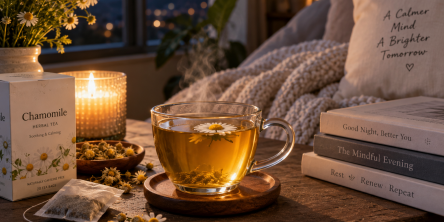
We live in an era where restorative rest is increasingly difficult to achieve. The relentless pace of contemporary work environments leaves little room for mental decompression.

Look up almost any doctor before an appointment, which is what the majority of patients now do, a
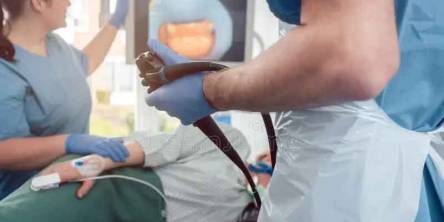
Endoscopy is a minimally invasive medical procedure that enables healthcare professionals to examine the internal organs and body cavities using a thin, flexible instrument called an endoscope.
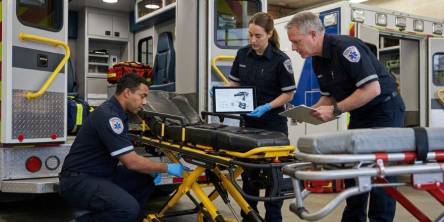
Learn how to choose the right ambulance stretcher for your fleet in 2026 by comparing safety, durability, mobility, comfort, and key features.

Look at how people around you actually watch things. Captions on. Not in a noisy train carriage, not in a shared flat at midnight, but at home, alone, on a good television, by people whose hearing is fine.

Finding the right medical daycare involves more than choosing whichever center is closest to home.