

Fitting Hardwood Flooring on Stairs
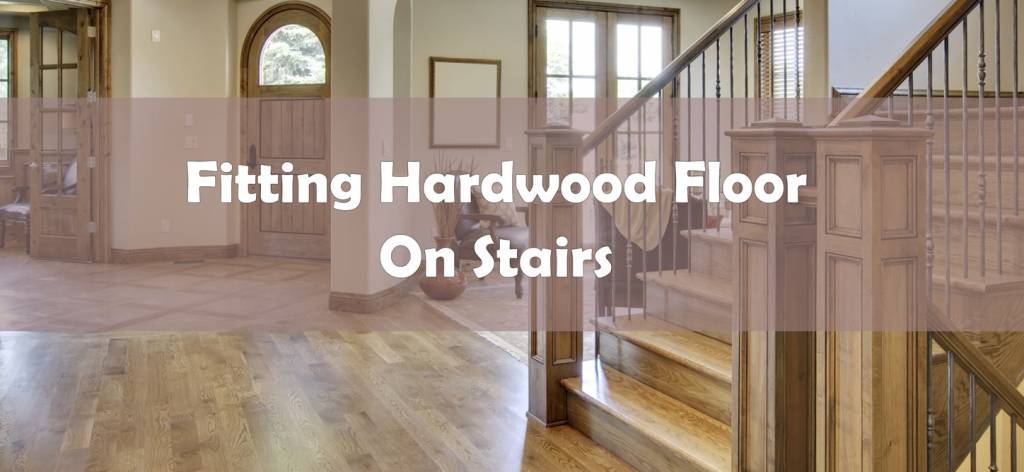
To be honest, installing a hardwood flooring might sound really difficult task, but in fact when it's on stairs isn’t that hard. Still, this is not a task that can be performed blindly, without any previous experience and proper preparation. Before beginning such a task, you must determine the amount of time, money and patience you are willing to invest in the project. It would be pointless to attempt it if you feel you won’t be able complete it, doesn’t it?
Let’s take a step by step look and see the process in depth. This article is dedicated to those who had no previous experience in such matters and it will cover the very basics from the start. Keep in mind, that this is not a DIY guide, but simply a bit of general information you may find useful.
The Parts of the Staircase
Stair thread - It is the horizontal part of the stairs upon which people actually step.
Stair riser - The vertical section between each thread.
Stair nosing - Edging part protruding above the riser. Can be part of the thread or be fixed on top of it.
Stair stringer(skirting) - The frame upon which rest the thread and the risers. Main structural support of the stairways.
Hardwood on Stairs
After clearing the basic concepts, let’s take a look at what does the process actually involves. In order to install a new hardwood flooring on your stairs, you must first cut the old nosing. This way the threads and the risers will form a perfect 90-degree angle and allow the hardwood to be placed properly.
Now it’s time for decisions. You can cover your stairs with either solid threads or strips and planks. The majority of people seem to prefer the solid alternative but satisfying results can be achieved either way.
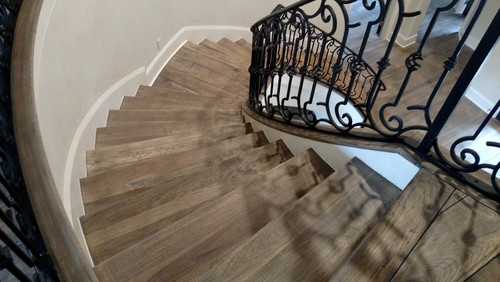
Keep in mind that the prefinished strip method will probably be a bit more expensive since you have to include a stair nosing in addition to the plank. Also, there is a limited choice of nosings, so always consult your fitter before buying new flooring. My personal recommendation is to go for solid 180+ mm thread which comes as a single piece and there will be no need to install a nosing separately.
You Have Plenty Of Choice
There are no limitations when it comes to wood species. You can use all types of hardwood but naturally, some will simply offer better qualities. You can also choose between solid and engineered hardwood. Engineered boards will be more resistant to moisture and temperature changes but cannot be refinished as often and you can expect them to have a shorter lifespan.
Solid wood also isn’t without disadvantages of its own. It will be more likely to crack or warp compared to the engineered alternative. On the other hand, stairs are one of those parts of the house which will frequently experience traffic. The possibility to sand and refinish relatively often is a great benefit, that should not be underestimated. However, solid wood is more expensive in general and a bit more complicated to install. Because of this, you can expect that it will cost you slightly more.
In the end, hardwood flooring for stairs (or almost anywhere in the house) is a great idea. Some people prefer to use carpets on their staircases but those are harder to clean and maintain while being much less durable. If you are looking for long lasting investment, definitely your best option is the real wood. For the DIY fans, I will recommend this video, where every step from the process is explained, so it will make the whole process easier.
More detailed information on this topic (closer to DIY guide) you will be able to find here.
Similar Articles

A downsizing move has two hard parts: deciding what stays and physically moving it, and most moving checklists ask people to do both at once.

Lighted vanity mirrors for bathroom have been soaring in demand recently. These mirrors are stylish and multifunctional, with the modern polish every home deserves.

A driveway is one of the first things people notice about a property, and it takes a daily beating from vehicles, weather and time.

Your switchboard is the heart of your home’s electrical system.

Learn how often restaurants should pump grease traps, from the 25% rule to volume and menu factors, and build a schedule that avoids backups and fines.

Discover five practical ways to control crawl space moisture with better drainage, vapor barriers, dehumidification, and routine inspections for your home.
Learn 6 practical interior upgrades for your compact roadster, from console shelves to phone mounts, that improve comfort and storage without clutter.

The most reliable way to keep outdoor stone looking its best through spring, summer and fall in 2026 is to match the product to the stain and the surface, rather than rely on a single all-purpose wash

Prepare your condo for professional management with a practical pre-onboarding checklist covering documents, finances, maintenance, and resident communication.