

Rattan Outdoor Furniture: Natural Versus Synthetic
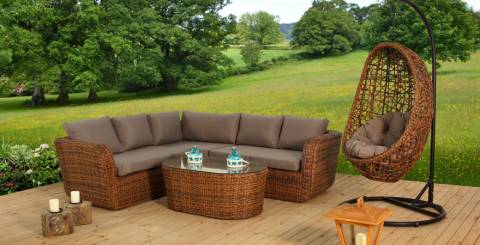
For the past few decades, rattan outdoor furniture has all but been a staple of gardens, porches and patios the world over. With its mixture of visual appeal, durability, sturdiness and relatively low maintenance, the material has captured the hearts of many a garden owner, and rattan outdoor furniture sets continue to be perennial best sellers for any furniture or homeware provider.
Yet, as home-owners who have done their research will know, not all sets of this type are created equal. Specifically, rattan outdoor furniture can be made of natural rattan, sourced from palm trees, or of a synthetic counterpart, a polythene alloy which has been growing in popularity among home owners due to a number of characteristics. The present article aims to draw a comparison between these two types of materials, highlighting the advantages each holds over the other, so as to give home-owners an overview of what to expect prior to purchase.
Natural Rattan: Demanding Beauty
Natural rattan is obtained by stripping the branches of a specific type of palm tree, found in many parts of Asia and some parts of Africa. This material is light and flexible, yet extremely sturdy at the same time, and it is those characteristics which make it popular among weavers. Rattan is often used in its native regions as the basis for wicker baskets and furniture, and this trend has spread to the western world as well, with rattan outdoor furniture in particular being quite widespread.
Yet, attractive and sturdy though it is, natural rattan has a series of traits which may potentially put home-owners off purchasing furniture made out of it. Specifically, the material is notable for fraying easily and requiring a significant amount of care. While said care is not at all hard to undertake, and will more often than not simply entail basic maintenance, it may nonetheless be a deal-breaking factor, particularly for home-owners shorter on time or who wish to use the rattan outdoor furniture in their summer home or another space where they will not always be present. Still, for those who do have the time and patience to spare, furniture made out of this material will undoubtedly make for a striking, eye-catching addition to any garden, patio or deck.
Synthetic Rattan: Best of Both Worlds
The word ‘synthetic’ continues to have a somewhat negative connotation in western society; yet, as synthetic rattan outdoor furniture shows, there is often no reason at all for this stigma to exist. Indeed, synthetic materials can often combine the best of both worlds, retaining the attractive, appealing characteristics of their natural counterparts while also adding a number of other positive traits.
Synthetic rattan outdoor furniture is a perfect example of this, as it effectively eliminates most of the downsides to owning furniture made of this material while retaining its visual appeal. Namely, synthetic rattan does not fray, and therefore requires a significantly lower amount of maintenance that the natural product. Similarly, natural rattan is notoriously vulnerable to inclement weather conditions, while its synthetic counterpart is usually treated so as to be weather-resistant. What this means, in practical terms, is that synthetic rattan outdoor furniture can be left outside year-round if necessary, and will not be significantly damaged by rain or snow; again, this is in sharp contrast to its natural counterpart, which must be stored in a cool, dry place during the colder months of the year. This, in turn, makes this type of material popular among home and garden owners who do not wish to spend a great deal of time maintaining and caring for their furniture; as such, it is not uncommon to see synthetic rattan outdoor furniture sets in western back yards and patios, in lieu of the real thing.
Conclusion
As this article has hopefully made apparent, there really is no right or wrong answer to the question of whether synthetic rattan is better than its natural counterpart; the two simply have different sets of characteristics which make them suitable for different purposes. The durable and weather-proof nature of synthetic rattan, for instance, makes it ideal for rattan outdoor furniture, while the natural variant may be preferred for indoor items or basket. It all comes down to knowing what to expect from either kind.
Similar Articles

If you have ever cleared the dining table for a blow-up mattress, or given up your own bedroom for a week while relatives filled the house, you already understand the problem.
According to environmental studies, the average person spends roughly ninety percent of their life indoors. This staggering reality has sparked a widespread shift in how we approach interior spaces, especially as remote work and digital lifestyles keep us tethered to screens.

The garden has quietly become the most valuable extra room in the British home. With hybrid working now a fixture rather than a phase, the wider outdoor-living economy is booming.

Most people who hire a skip bin for the first time arrive at the decision under some degree of pressure. The renovation has started, the waste is accumulating, and the question of what to do with it has become urgent.

Most homeowners approaching a granny flat project spend considerable time thinking about the end result and considerably less time thinking about the floor plan decision that will largely determine what that result looks and feels like.

Running out of room? Happens to almost everyone eventually. Garages fill up, closets overflow, and suddenly the lawnmower is living next to the holiday decorations in some awkward standoff.

Heating and cooling equipment affect more than the temperature on the thermostat. It influences comfort between rooms, humidity, airflow, and the condition of the air as it moves through the home.

The key to a minimalist living room is restraint, but that's not enough to make a room feel finis

Rectification of exterior cladding may be required during the lifetime of a building for several reasons: to replace non-compliant cladding/combustible panels, to repair damage, to improve energy efficiency, or to modernise an older building.