

How Fiber‑Optic Internet Upgrades Your Streaming and Gaming Experience
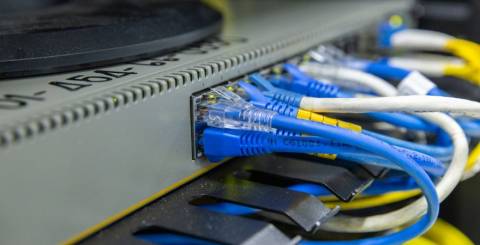
You know that feeling. You're three seconds from winning a ranked match, and the game freezes. Or it's Friday night, the whole household is settled in for a movie, and the buffering wheel shows up like an uninvited guest. These moments aren't just annoying. They're avoidable. Fiber‑optic internet gaming performance has become the clearest answer to these problems, because fiber moves data as pulses of light through glass, not electrical signals through copper wire. The gap in speed and reliability between fiber and traditional cable or DSL connections is real, measurable, and genuinely felt mid-game.
Here's a grounding data point: Netflix itself recommends 15 Mbps or more for a single 4K stream. Multiply that across a few TVs, a gaming console, and someone on a video call, and you're burning through bandwidth faster than most people expect.
For South Florida residents specifically, fiber availability has grown steadily as providers push into residential communities and multi-unit buildings. Companies like Fibernow Internet Provider have responded directly to that shift, building plans designed around what gamers, streamers, and busy households actually need, not just what looks good on a spec sheet.
The Core Ways Fiber Changes Online Gaming Fundamentally
Speed matters. But fiber's bigger contribution isn't raw Mbps, it's stability. The improvements stack up across latency, stream quality, and connection consistency all at once.
Why Low Latency Fiber Internet Transforms In‑Game Reactions
Ping measures the round-trip time for data between your device and a game server. Jitter measures how unpredictably that time varies. Fiber typically delivers 10–20 ms latency. Cable runs 25–40 ms. 5G home internet sits around 30–50 ms. Satellite? You're looking at 40–100+ ms on a good day.
Low-latency fiber internet from Fibernow Internet Provider removes the small but consequential delays that cause rubber-banding, desync, and missed hit registration. In a tactical shooter, the difference between 12 ms and 45 ms is the difference between your action registering and your opponent already being somewhere else. Jitter is often the silent killer that players blame on "bad servers." Often, it's the connection.
Symmetrical Speeds for Gaming, Streaming, and Everything Running Simultaneously
Cable plans tend to offer strong download speeds with embarrassingly weak uploads, sometimes just 10–20 Mbps going out. That imbalance creates real problems for anyone who streams, uses Discord voice chat, or uploads content. Symmetrical speeds for gaming mean your upload headroom matches your download capacity.
At 300–1,000 Mbps symmetrical, you can broadcast at 1080p60 on Twitch, run an active game session, and keep Discord stable simultaneously, without quality drops. Cable genuinely cannot offer that balance consistently. It's not a minor limitation; it's an architectural one.
Packet Loss, Stability, and Why Hit Registration Fails
Packet loss occurs when data sent between your device and a server simply never arrives. Glass fiber cables resist the electromagnetic interference that plagues copper-based connections, making packet loss significantly rarer under normal conditions.
Even 1–2% packet loss is enough to cause missed shots, rubberbanding, and mid-match disconnects, particularly brutal in ranked or competitive play. Tools like PingPlotter or your router's built-in diagnostics help you catch this. Wired Ethernet on fiber dramatically reduces packet loss compared to shared wireless or coaxial setups.
Fiber Internet Streaming Benefits for Households and Creators Alike
Gaming aside, fiber fundamentally changes how your household consumes content and how creators push it out.
High‑Speed Fiber Streaming for 4K, HDR, and Multi-Device Households
One 4K stream needs a sustained 15+ Mbps floor. Add a second TV, a gaming console actively downloading an update, and a streaming encoder running in the background, and you're pushing 60–80 Mbps without breaking a sweat. High‑speed fiber streaming handles that load without congestion or throttling, which is exactly where cable connections buckle during peak evening hours.
Roku players, Apple TV units, and smart TVs all benefit from fiber's consistency. The difference shows up most during prime time, when cable infrastructure gets shared, and speeds quietly dip.
Live Streaming Quality for Creators and Competitive Viewers
Upload speed is everything for live content. Hitting 1080p60 on Twitch requires roughly 6 Mbps upload. Push to 1440p, and that climbs to 9–12 Mbps. Broadcast in 4K, and you need 20+ Mbps sustained. Fiber's symmetrical capacity keeps those bitrates rock-steady across hours-long sessions, so VOD recordings stay sharp and your audience never sees an unexpected quality collapse.
Cloud Gaming, Streaming While You Play, and What Fiber Makes Possible
Between October and December 2024, players streamed 140 million hours of gameplay through Xbox Cloud Gaming. That's not a niche use case anymore; cloud gaming is mainstream, and it runs entirely on connection quality.
Low Latency Fiber Internet as the Foundation for Cloud Play
Cloud gaming streams rendered video from a remote server while your controller inputs travel back in real time. Local hardware barely matters; your connection is everything. Low-latency fiber internet delivers the sub-20 ms, low-jitter environment these platforms require to feel truly responsive rather than sluggish and delayed.
Broadcasting While Competing: The Bandwidth Math
A competitive Apex Legends player streaming to Twitch needs upload bandwidth for the broadcast and a clean, low-latency pipe for game data. Symmetrical speeds for gaming prevent those two demands from cannibalizing each other. Here's a quick reference:
| Stream Quality | Target Bitrate | Minimum Upload Speed |
| 1080p60 | 6 Mbps | 10 Mbps |
| 1440p | 9–12 Mbps | 15 Mbps |
| 4K | 20+ Mbps | 30+ Mbps |
Technical Reasons Fiber Outperforms Cable and Wireless Every Time
Fiber carries light, not electricity. No electromagnetic interference. No signal degradation over distance. No shared neighborhood bandwidth that tanks during evening hours. For you, as a gamer or streamer, this translates directly into consistent speeds and fewer random slowdowns when you need reliability most.
Data caps deserve attention, too. A single AAA title download runs 50–100 GB. Cloud gaming consumes 10–15 GB per hour. Streaming at high quality adds another 3–5 GB on top of that. Data caps quietly turn all of this into a usage budget, and throttling mid-broadcast is genuinely painful. Unlimited fiber plans eliminate that ceiling.
Quick Answers to Common Fiber Questions
Is 300 Mbps fiber enough for streaming?
For households running 3–5 devices concurrently, streaming, browsing, and video calls, 300 Mbps provides comfortable headroom without buffering or lag.
Does fiber make a real difference in gaming?
Absolutely. The consistency of 10–20 ms latency and near-zero jitter directly reduces rubber-banding and hit registration failures compared to cable or 5G alternatives.
Still lagging after switching to fiber?
Check your connection type first; Ethernet versus Wi-Fi makes a massive difference. Review router firmware, QoS settings, and test for packet loss. Fiber itself is rarely the bottleneck once those variables are addressed.
The Bottom Line
Raw speed is only part of the story. What fiber actually delivers is consistent low latency, symmetrical speeds for gaming, and stable packet delivery, working together to create an environment where competitive play feels fair, and streams run without drama.
Pair that with a wired home setup, smart QoS configuration, and a truly unlimited plan, and the upgrade becomes something you feel immediately. Your gaming and streaming setup deserves a connection that keeps up. The real question is whether your current provider is actually delivering one.
Similar Articles
Are you unable to proceed ahead in terms of choosing Wireless or LAN connection?
In today’s fast-paced business world, a reliable and high-speed internet connection is more important than ever. As businesses grow and depend more on cloud-based applications, video conferencing, and seamless customer experiences, the need for a stable internet connection becomes critical.

Discover how Piso Wifi lets you control your internet time with the "Pause Time" feature. Access it easily through the 10.0.0.1 gateway and make every peso count. Affordable, flexible, and designed to give you more for less—learn how to get the most out of your Piso Wifi today!