

How Ecommerce SEO Services Align Search Strategy With Business Growth

In ecommerce, traffic is easy to obsess over because it’s visible. Rankings, sessions, impressions, click-through rates — they all show up neatly in a dashboard, and they all feel like progress. But growth is a different thing entirely. Growth is revenue that compounds, customer acquisition costs that become more sustainable, and product pages that keep selling long after a paid campaign ends.
That’s why the best ecommerce SEO work isn’t really about “getting more visitors.” It’s about connecting search strategy to commercial outcomes. When SEO is treated as a business function rather than a marketing silo, it becomes one of the few channels capable of improving visibility, conversion opportunity, and long-term profitability at the same time.
Why Ecommerce SEO Has to Be Tied to Commercial Goals
A surprising number of ecommerce brands still separate SEO from the rest of the business. The SEO team targets keywords. Merchandising manages product availability. Paid media focuses on return on ad spend. Content sits somewhere off to the side. The result is often a site that ranks for terms that don’t convert, or converts on pages no one can find.
That disconnect is expensive.
Search strategy works best when it reflects how a business actually grows. For one retailer, that might mean increasing margin by pushing higher-value product categories. For another, it might mean reducing dependency on paid acquisition by improving rankings for high-intent, non-brand searches. For a newer brand, the goal might be category visibility and market share rather than immediate volume.
The important shift is this: SEO should not start with keywords alone. It should start with business priorities.
Once those priorities are clear, search data becomes much more useful. Instead of asking, “What has the most volume?” teams can ask better questions:
-
Which categories have the strongest profit potential?
-
Where are we losing visibility to marketplaces or larger competitors?
-
Which search journeys support repeat purchase behaviour?
-
What content helps move buyers from discovery to decision?
Those are the kinds of questions that turn SEO from a reporting exercise into a growth lever.
Search Intent Is the Bridge Between Visibility and Revenue
One of the biggest reasons ecommerce SEO underperforms is that brands chase broad visibility without paying enough attention to intent. Ranking for an informational term may bring attention, but not every visitor is ready to buy. On the other hand, someone searching for a specific product type, use case, or comparison query is much closer to a decision.
That’s where structured ecommerce SEO services tend to create the most value: by mapping search intent across the customer journey and building pages that serve each stage with precision. A category page, for instance, should capture commercial demand. A buying guide can support early research. Comparison content can help prospects narrow options. Product pages should remove friction at the moment of purchase.
If you want a practical example of how this kind of work is positioned in the market, resources around ecommerce organic growth services often highlight the same principle: sustainable search performance comes from aligning technical improvements, content planning, and commercial priorities rather than treating SEO as a standalone task.
That alignment matters because ecommerce search behaviour is rarely linear. Customers compare products across tabs, revisit category pages, refine their terms, and bounce between discovery and purchase intent. A good SEO strategy doesn’t just attract them once. It creates multiple useful entry points that match how people actually shop.
The Core Areas Where SEO Supports Business Growth
Category Strategy Drives Scalable Demand
For many ecommerce businesses, category pages are the real growth engine. They sit at the intersection of search demand, product discovery, and conversion. Yet they’re often thin, duplicated, or built mainly for navigation rather than search performance.
A strong category strategy looks at:
-
whether the page targets a meaningful commercial query
-
how products are grouped and filtered
-
whether copy supports both relevance and usability
-
internal links from supporting content and subcategories
-
indexation issues caused by faceted navigation
Done well, category optimisation improves far more than rankings. It helps shoppers find the right products faster, which can lift both conversion rate and average order value.
Technical SEO Protects Revenue, Not Just Rankings
Technical SEO is often described in abstract terms — crawlability, canonical tags, schema, site speed. Important, yes, but the business case becomes clearer when you connect those issues to revenue.
If search engines can’t reliably crawl new products, seasonal collections may miss their moment. If duplicate URLs dilute authority, priority pages struggle to rank. If a mobile site is slow or unstable, visibility and conversions both suffer.
For ecommerce brands with large inventories, technical discipline is essential because small issues scale quickly. A template-level error can affect thousands of pages overnight. In that environment, SEO isn’t just an acquisition tactic; it’s part of operational resilience.
Content Expands Demand Beyond Product Listings
Not every sale begins with a product query. Many begin with a problem, a comparison, or a question. That’s where content plays a strategic role.
The most effective ecommerce content doesn’t exist to “blog for SEO.” It exists to support real buying decisions. Think sizing guides, use-case articles, material comparisons, care instructions, gift ideas, or “best for” pages tailored to customer needs. This kind of content can bring in qualified traffic earlier, build trust, and channel users toward conversion pages.
It also helps brands compete where product pages alone can’t. If larger competitors dominate core transactional terms, informational and mid-intent content can open a second path into the market.
What Good Ecommerce SEO Measurement Looks Like
One reason SEO gets undervalued is that teams often report on metrics that are easy to track but hard to connect to outcomes. Rankings and traffic matter, but they don’t tell the full story.
A more useful measurement framework ties SEO performance to business signals such as category-level revenue, non-brand conversion trends, assisted conversions, new customer acquisition, and margin-led product visibility. In other words, don’t just ask whether organic traffic increased. Ask whether the right traffic increased.
This also changes how success is judged over time. Not every SEO gain appears instantly, especially when technical changes, content development, and site architecture updates are involved. But when the strategy is aligned to the commercial model, the compounding effect becomes easier to see: less reliance on paid media, stronger performance in priority categories, and a search presence that keeps working between campaign spikes.
SEO Works Best When It’s Built Into the Business
The real value of ecommerce SEO services is not in isolated optimisations. It’s in creating alignment between how people search, how your site serves them, and how the business wants to grow.
That means SEO should have a seat in decisions about site structure, product launches, seasonal planning, and content prioritisation. It should inform what gets built, not just what gets edited afterward.
When that happens, search stops being a channel you “do” and becomes infrastructure for growth. And in ecommerce, where competition is relentless and paid acquisition rarely gets cheaper, that kind of durable advantage is hard to ignore.
Similar Articles

Most answer engine optimization advice is written as if you had a spare quarter and a PR budget. You read it, agree with all of it, and then do none of it, because the list has fourteen items and you have one person who also handles the newsletter.

When a prospective patient searches for a local healthcare clinic, they are often looking for immediate answers.

For decades, typing a query into a search engine felt like speaking to a highly literal robot. If you did not use the exact phrasing, you rarely found what you were looking for.
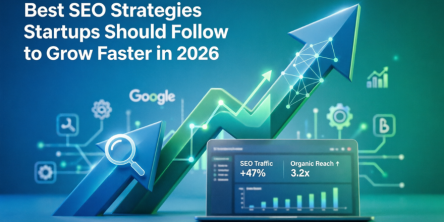
Starting a business is hard enough. Getting people to actually find you online?

Local shops used to just worry about having the right words on their page. Now it is often seen that AI looks for "entities" which is just a fancy way of saying a real business.
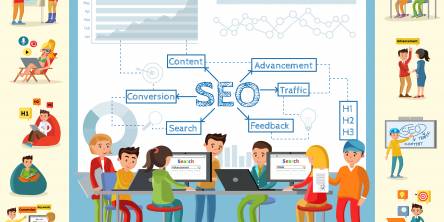
Organic growth plays a central role in how SaaS companies build sustainable demand. Paid channels can generate short term traction, yet long-term growth requires a strategy that steadily attracts qualified traffic and converts that interest into product adoption.

Discover what every clinic needs to know about medical SEO services to boost online visibility, attract more patients, and grow their practice effectively.

Dental practices depend heavily on local search. When the need arises, most patients don’t compare dozens of options.
Management of an e-commerce business is more competitive than ever. You know that, to note, you need a solid digital presence.