

Building a Resilient Investment Portfolio Through Tangible Assets
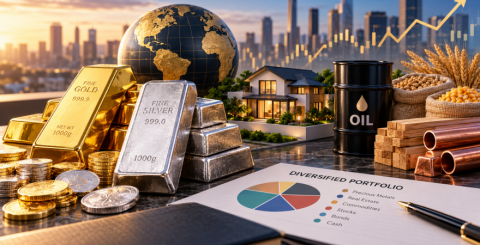
The landscape of wealth preservation is shifting rapidly. For decades, investors relied heavily on standard models, such as the traditional 60/40 stock-to-bond allocation, to balance long-term growth with short-term security. However, recent market volatility, fluctuating interest rates, and elevated global inflation have steadily diminished the defensive benefits of these conventional strategies. Before exploring alternative physical investments to combat these challenges, it is essential to establish a strong foundation of smart money management techniques, ensuring your core budget and emergency savings are completely secure. Once that stable base is firmly established, sophisticated investors are increasingly looking beyond traditional paper assets. Tangible assets are now playing a crucial role in modern portfolio diversification, providing a much-needed buffer against unpredictable economic cycles and geopolitical shifts.
The Case for Physical Commodities in Modern Wealth Strategy
As global financial markets become more deeply interconnected, traditional asset classes are showing much higher correlations. When equities take a sudden downturn, government bonds no longer guarantee the reliable counterbalance they once provided. This fundamental shift has prompted financial analysts and wealth managers to look toward physical commodities to fill the gap. Unlike digital or paper assets, tangible commodities maintain an intrinsic, real-world value that cannot be erased by corporate bankruptcies or digital market crashes.
According to detailed market analysis from Bloomberg, physical commodities have historically delivered the highest annual returns during rising inflation, performing exceptionally well compared to standard financial instruments. Because these assets often move independently of the broader stock market, they introduce a distinct and powerful layer of stability. During periods of elevated interest rates, this low correlation protects overall portfolio values from severe, sweeping drawdowns. By incorporating physical assets, investors can effectively dilute the concentration risks that arise from being overexposed to just one or two traditional markets.
Precious Metals and the Dual-Purpose Advantage
Among tangible assets, precious metals present a unique dual-purpose advantage for strategic investors. They serve as a reliable monetary safe haven during severe economic downturns while simultaneously maintaining fundamental value through immense, ongoing industrial demand. Silver serves as a prime example of this complex dynamic. When investors decide to add these essential metals to their portfolios, standardised bullion formats are highly favoured for their straightforward logistics. For example, acquiring a silver bar 1kg offers a highly cost-effective balance between low manufacturing premiums and convenient stackability in secure vault facilities.
Global industrial demand for the metal reached a record 680.5 million ounces in 2024, accounting for roughly 60 percent of total global consumption. Clean energy initiatives and the rapid expansion of modern artificial intelligence infrastructure are massive drivers of this upward trend. The global silver market actually experienced a massive supply deficit of 148.9 million ounces in 2024, reinforcing the metal's strong fundamental position. Compounding this supply issue is the fact that market elasticity remains heavily constrained. Up to 80 percent of global silver is extracted as a byproduct of mining other base metals like copper and zinc, meaning production cannot quickly pivot to meet this surging modern demand.
Key Benefits of Adding Tangible Assets to Your Portfolio
Whether considering precious metals, premium real estate, or agricultural commodities, integrating physical assets offers several distinct strategic advantages for long-term wealth preservation. Understanding these benefits is key to building a robust financial strategy.
- Inflation Hedging: As the cost of basic goods and services rises, the nominal value of physical commodities generally increases in tandem. This dynamic preserves an investor's purchasing power far better than cash savings left in standard, low-yield bank accounts.
- Reduced Market Correlation: Tangible assets frequently act as a stabilising portfolio buffer. When equity markets experience sharp, unexpected sell-offs, commodities tend to hold their ground or even appreciate as investors seek safety.
- Intrinsic Industrial Value: Many physical assets are mandatory components in modern manufacturing and technology. For instance, electric vehicles require between 25 and 50 grams of silver per vehicle, which is roughly double the amount needed for traditional internal combustion engine cars. Furthermore, driven by digital innovation, global data centre demand for silver is forecast to reach 42.3 million ounces by 2026.
- Zero Counterparty Risk: Unlike holding a corporate stock or a government bond, owning a physical asset outright means its inherent value does not depend on a secondary party fulfilling a contractual obligation or remaining financially solvent.
Strategies for Sustainable Diversification
A comprehensive 2026 UBS Global Family Office Report indicated that sophisticated wealth managers are aggressively broadening their diversification strategies. They are actively utilising alternative and tangible assets to mitigate the profound risks associated with heavy equity concentration. However, it is absolutely vital to remember that physical assets should complement a well-rounded portfolio rather than completely dominate it. Storage fees, comprehensive insurance, and market liquidity are all practical factors that require careful, ongoing planning.
Working with reputable dealers and following independent research from advisories like Oxford Economics or Metals Focus can help investors make informed decisions based on comprehensive supply and demand data. Ultimately, building a resilient investment portfolio is about creating a carefully balanced mix of traditional growth vehicles and physical safety nets. By strategically incorporating tangible assets, modern investors can confidently navigate future economic uncertainties while rigorously protecting their hard-earned wealth over the long term.
Similar Articles

Explore key financial factors to consider before relocating in retirement, from housing and taxes to healthcare, living costs, and long-term savings.
When launching a start-up, entrepreneurs often wear every conceivable hat, from marketing director and product developer to customer service representative and weekend administrator.

Scaling a business is a thrilling milestone, yet rapid growth often exposes cracks in a company's financial foundation.

The global marketplace offers incredible opportunities for growing businesses, but scaling across

Ever wondered why some businesses seem to breeze through tax season while others scramble at the last minute?

Learn how financial guidance supports smart money decisions at every life stage. Explore budgeting, saving, tools, and ways to build long-term financial confidence.
Upgrading your lifestyle is an exciting prospect that often marks a major transition in your personal journey.

Every small business owner dreams of taking their enterprise to the next level. However, achieving sustainable growth is remarkably difficult in today's competitive landscape.

Global money transfers between individuals continue to expand as migration, digital wallets, and mobile banking reshape how funds move across borders.