

Microsoft Power Apps: Why it is the Ideal to Build Business Apps in 2022

As technologies continue to evolve, businesses are starting to feel a growing need for solutions that can help them keep up with the changing circumstances in the market as well as the distinctive needs of their customers. Microsoft Power Apps is rapidly gaining popularity as the top tool for such a scenario, for it enables rapid app development sans the fuss associated with the traditional development process.
It is fundamentally a development platform for mobile and web apps that allows “citizen developers” to reach capabilities. It was once only reserved for high-end development tools. And, what’s more, PowerApps makes it quite easy to learn. It allows users to swiftly take charge of making the correct decisions when it comes to structuring.
. Listed below are some of the other benefits that Power Apps offers to companies.
1. Low-code development: Perhaps one of the most celebrated features of Power Apps is the fact that it necessitates low to no coding for the development of top-notch apps. This means that companies do not need to hire expensive development teams and still be able to quickly deploy robust apps.
2. Intelligence automation: A crucial feature Power Apps brings to the table is a set of automation tools that can assist companies in a variety of aspects such as data sharing, customer relations management, task monitoring, etc.
3. Quick development: Since Power Apps is underpinned by a simple system, making it easier for companies to develop their apps lightning-quick. See, with Power Apps, companies gain a collection of templates of features, functionalities, etc. which can be added to the intended app by just dragging and dropping the needed functionality into the development canvas.
4. High-levels of security: The Power Apps suite allows companies to use Common Data Services via the role-based security model. As a result, the app’s users can set up security roles based on relevant access permissions. This helps protect businesses against myriad security-related vulnerabilities. Additionally, companies can ensure that employees can access only the data relevant to their job roles.
5. Cost efficiency: The conventional methods for app development are notoriously expensive and time-consuming. This is not a problem with Power Apps which empowers companies to quickly build highly capable customized apps for their businesses albeit without humongous investments.
Let us wrap this up with a handful of examples of some Power Apps-based apps.
1. Employee onboarding apps: Onboarding new employees is a complex but a critically-important part of any organization. The process can be made much easier with the help of Power Apps-driven employee onboarding employees.
2. Hazard reporting apps: For companies that often have employees in the field, it is imperative to keep a close eye on any hazards the staff may encounter. Power Apps can be used to build hazard reporting apps for companies.
3. Shift management apps: Countless companies all over the world also use Power Apps-based apps to efficiently manage their employees’ shifts.
Though a relatively new arrival on the scene, the Microsoft Power Apps suite has proven to be an invaluable tool in the arsenal of countless modern companies across the broad spectrum of industries around the world. It not only empowers companies to easily build tailored apps for their business, but also significantly cuts down the timelines involved in the design, development, and deployment of such apps. Let us not forget it also makes app development quite affordable, thus rendering Power Apps especially practical for small-scale businesses. So, if you too are considering bringing this mighty powerful Microsoft offering into the fold, we recommend you start by looking for a trusted provider of Power Apps consulting services.
Similar Articles

Running a restaurant involves much more than taking orders and serving food.

Field sales teams handle numerous responsibilities every day. Sales representatives travel between customer locations, conduct meetings, collect orders, record information, and report their activities to managers.

The app development market has evolved significantly over the past decade or so. Its impact on business has been equally consequential.

Offshore IT hiring means recruiting IT professionals who work from another country or region. Companies commonly use this approach for software development, QA, IT support, DevOps, cybersecurity, data, and project management.

By 2026, moving to the cloud is no longer merely a competitive advantage. It is a business necessity. Every organization across the broad spectrum of industries will be challenged to become more agile.
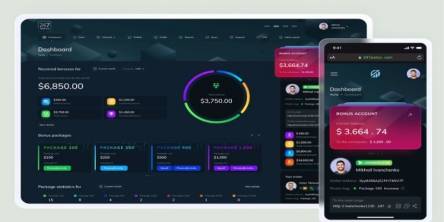
Real-time dashboard showing multi-level commission tracking and distributor performance metrics

Digital transformation initiatives are no longer unheard of in the corporate world. As a matter of fact, it is also well known that companies expanding their digital footprint tend to run into crippling legacy apps.

The financial aid office has become one of the most operationally strained departments on the modern U.S. campus. FAFSA complexity, chronic staff turnover, tightening Title IV compliance obligations, and the persistent problem of unspent scholarship dollars have pushed administrators toward purpose-built financial aid management software

The demand for software delivery has never been higher. Applications must be delivered faster and on a scale like never before.